
Quick Answer
Ground Support Equipment (GSE) refers to the vehicles, machines and systems used to service aircraft while they are on the ground. Common examples include Pre-Conditioned Air units (PCA), Ground Power Units (GPU), pushback tractors, baggage loaders, boarding bridges and aircraft service vehicles.
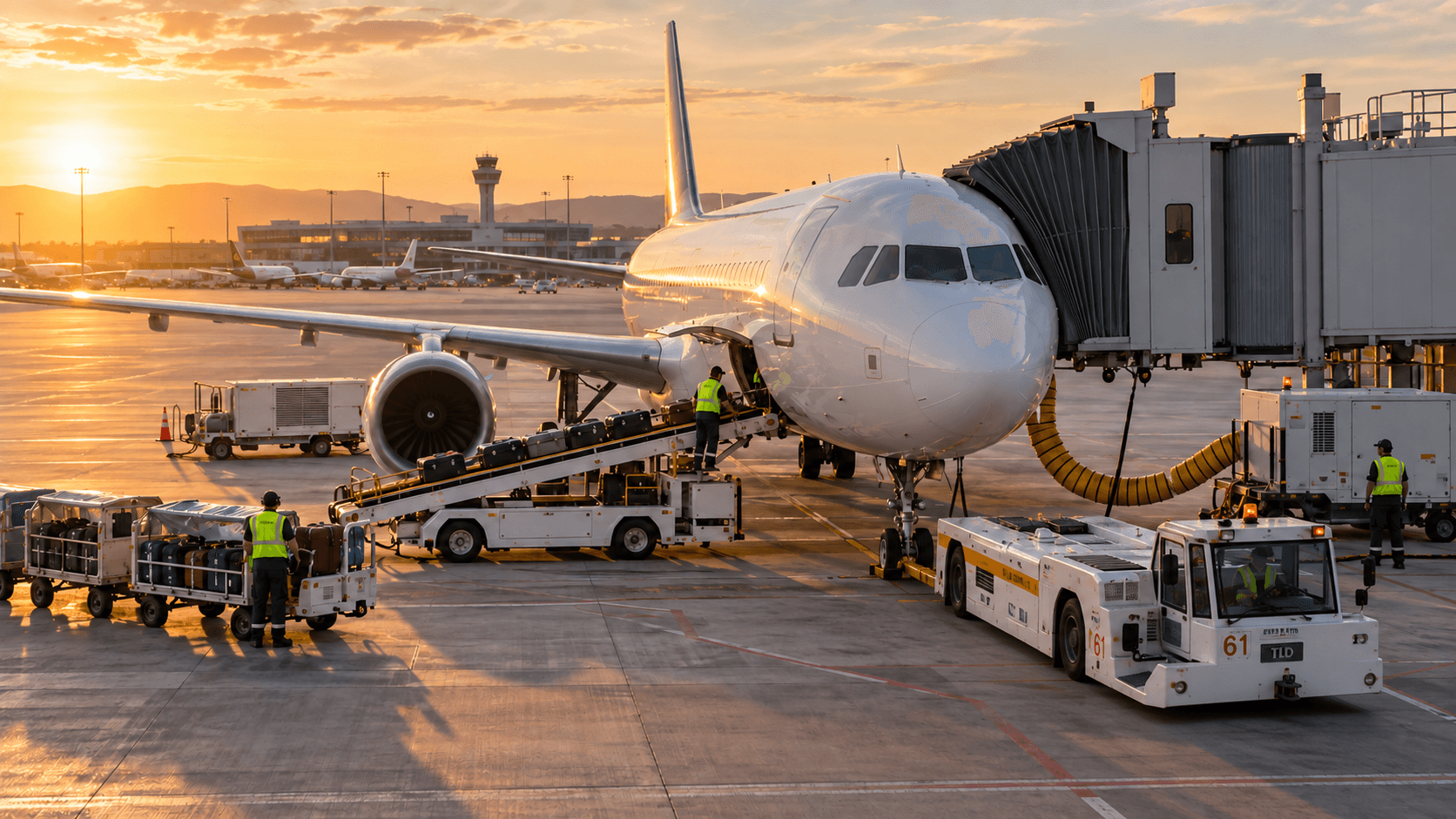
Every commercial flight depends on much more than the aircraft itself.
Once an aircraft arrives at the gate, a carefully coordinated sequence of ground operations begins. Electrical power may need to be connected, the cabin may require cooling or heating, baggage must be unloaded and loaded, passengers need to board or disembark, fuel and other services may need to be supplied, and finally the aircraft must be prepared for pushback.
The machines and systems that make these activities possible are collectively known as Ground Support Equipment, or GSE.
This guide explains what GSE is, the main types of equipment used around an aircraft, why reliability matters, and what airports and ground handlers should consider when selecting equipment.

What Is Ground Support Equipment?
Ground Support Equipment refers to the vehicles, machines and supporting devices used to service aircraft while they are on the ground.
Aircraft may require ground support when parked:
at a passenger boarding gate;
at a remote stand;
inside or near a maintenance hangar;
at a cargo apron;
or during maintenance and technical operations.
Unlike the aircraft itself, GSE normally remains on the ground and supports the services required before the next flight.
The term therefore covers a very broad range of equipment.
Some GSE supplies power or conditioned air. Some moves baggage, cargo or passengers. Other equipment moves the aircraft itself, supplies fuel and water, or creates a safe working environment around the aircraft.
A useful way to think about GSE is not as a collection of individual machines, but as an operational ecosystem surrounding an aircraft during turnaround.
⏱ Why GSE Matters During Aircraft Turnaround
Aircraft turnaround is one of the most tightly coordinated activities at an airport.
Multiple operations frequently take place at the same time, including passenger boarding, baggage handling, catering, cleaning, fueling, cabin temperature control and technical preparation.
The reliability and efficiency of GSE can therefore influence several important operational outcomes.
⏱️ Turnaround Efficiency
Ground teams operate within limited time windows.
If critical equipment is unavailable, incorrectly sized or unreliable, one delayed task may affect several downstream activities.
Reliable GSE helps teams complete servicing activities consistently and reduces unnecessary waiting.
🛡️ Apron Safety
The apron contains aircraft, vehicles, personnel and passengers operating within a relatively small space.
Equipment must therefore provide predictable operation, appropriate safety protection and reliable control.
💺 Passenger and Crew Comfort
Aircraft parked under direct sunlight can experience rapid cabin temperature increases, particularly in hot climates.
A Pre-Conditioned Air system can supply temperature-controlled air while the aircraft is parked, helping maintain acceptable cabin conditions during boarding, cleaning and maintenance.
📉 Operating Cost
Ground operations generate costs through energy use, labor, maintenance, equipment downtime and flight disruption.
For this reason, the lowest purchase price does not necessarily represent the lowest operating cost.
🌱 Environmental Performance
Airports are increasingly looking at electrification, energy efficiency and reduced local emissions.
Modern GSE therefore needs to be evaluated not only for output capacity, but also for energy performance across real operating conditions.
Main Types of Ground Support Equipment
GSE can be classified in different ways.
For airport operators, it is often more useful to categorize equipment according to the service it provides.
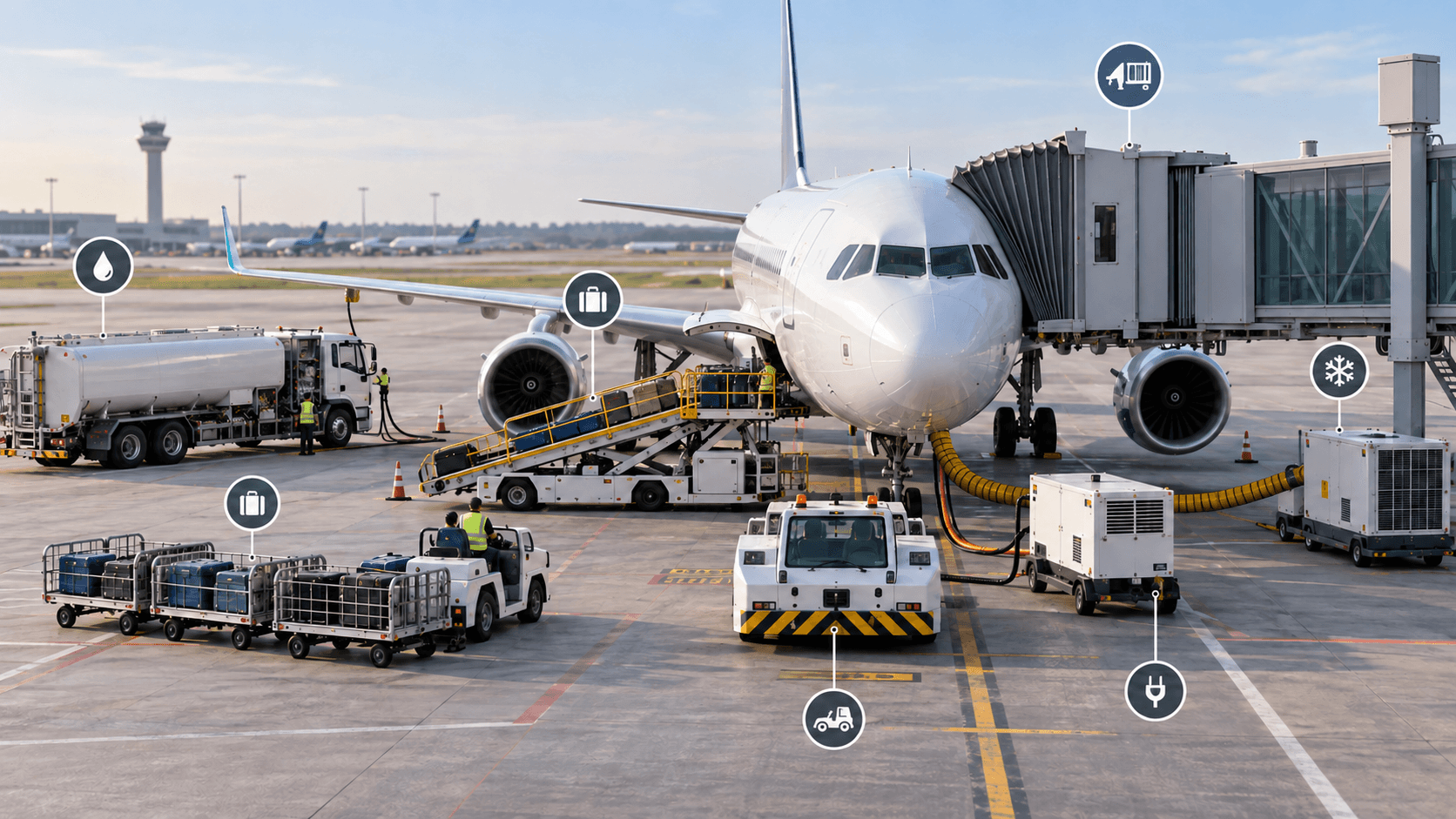
Category | Typical Equipment | Function |
|---|---|---|
⚡ Aircraft power | GPU, eGPU, 400 Hz systems | Supplies external electrical power |
❄️ Climate control | PCA / ACU | Supplies cooled or heated air |
🚜 Aircraft movement | Pushback tractor, tow tractor | Moves aircraft around the apron |
📦 Baggage & cargo | Belt loaders, container loaders, dollies | Handles baggage, cargo and ULDs |
👥 Passenger handling | PBB, stairs, apron buses | Supports passenger boarding and deboarding |
⛽ Aircraft servicing | Fuel, potable-water and lavatory vehicles | Services aircraft systems |
🛡️ Safety & maintenance | Chocks, cones, maintenance stands | Supports safe operations and maintenance |

⚡ Ground Power Units
Aircraft still require electricity when their engines are shut down.
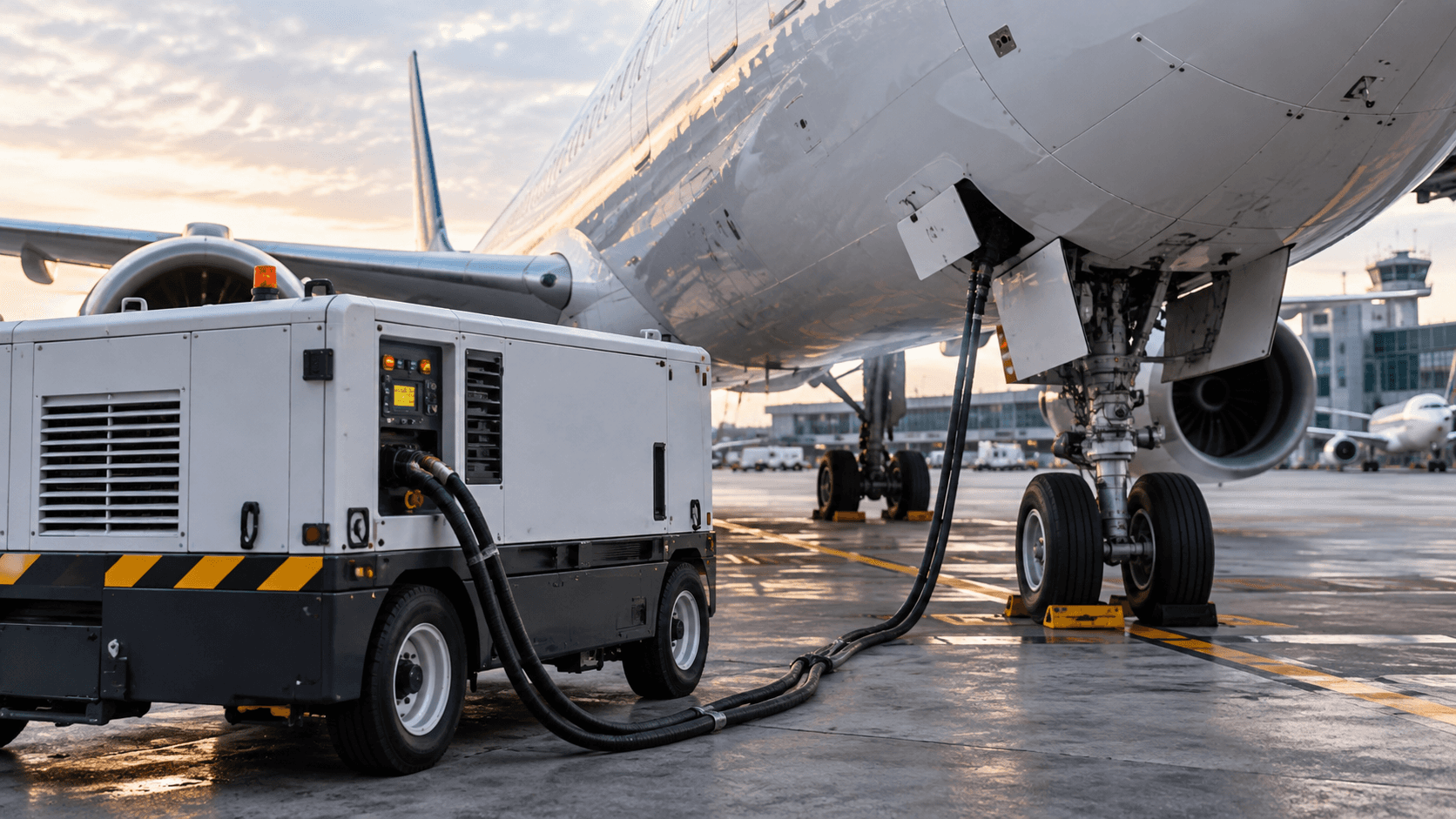
A Ground Power Unit, or GPU, provides external electrical power so aircraft systems can continue operating while the aircraft is parked.
Depending on the airport and application, ground power solutions may include:
fixed 400 Hz systems;
mobile GPUs;
battery-powered eGPUs;
diesel-powered units;
integrated gate power systems.
The appropriate solution depends on aircraft requirements, gate infrastructure and operational strategy.
❄️ Pre-Conditioned Air Units
A Pre-Conditioned Air unit, or PCA, supplies temperature-controlled air to an aircraft while it is parked.
This is particularly important during:
passenger boarding;
cabin cleaning;
aircraft maintenance;
long ground stops;
hot-weather operations;
cold-weather operations.
PCA performance should not be evaluated from cooling capacity alone.
Real-world performance can also depend on:
🌡️ Ambient temperature
💧 Humidity
✈️ Aircraft type
💨 Required airflow
📏 Static pressure
〰️ Hose length and configuration
⏱️ Duty cycle
🏗️ Installation method
⚙️ Control strategy
For airports operating in extreme climates, these factors become especially important.
A PCA designed around nominal conditions may behave very differently when operating continuously in high ambient temperatures or demanding humidity conditions.
How GSE Affects Airport Operating Economics
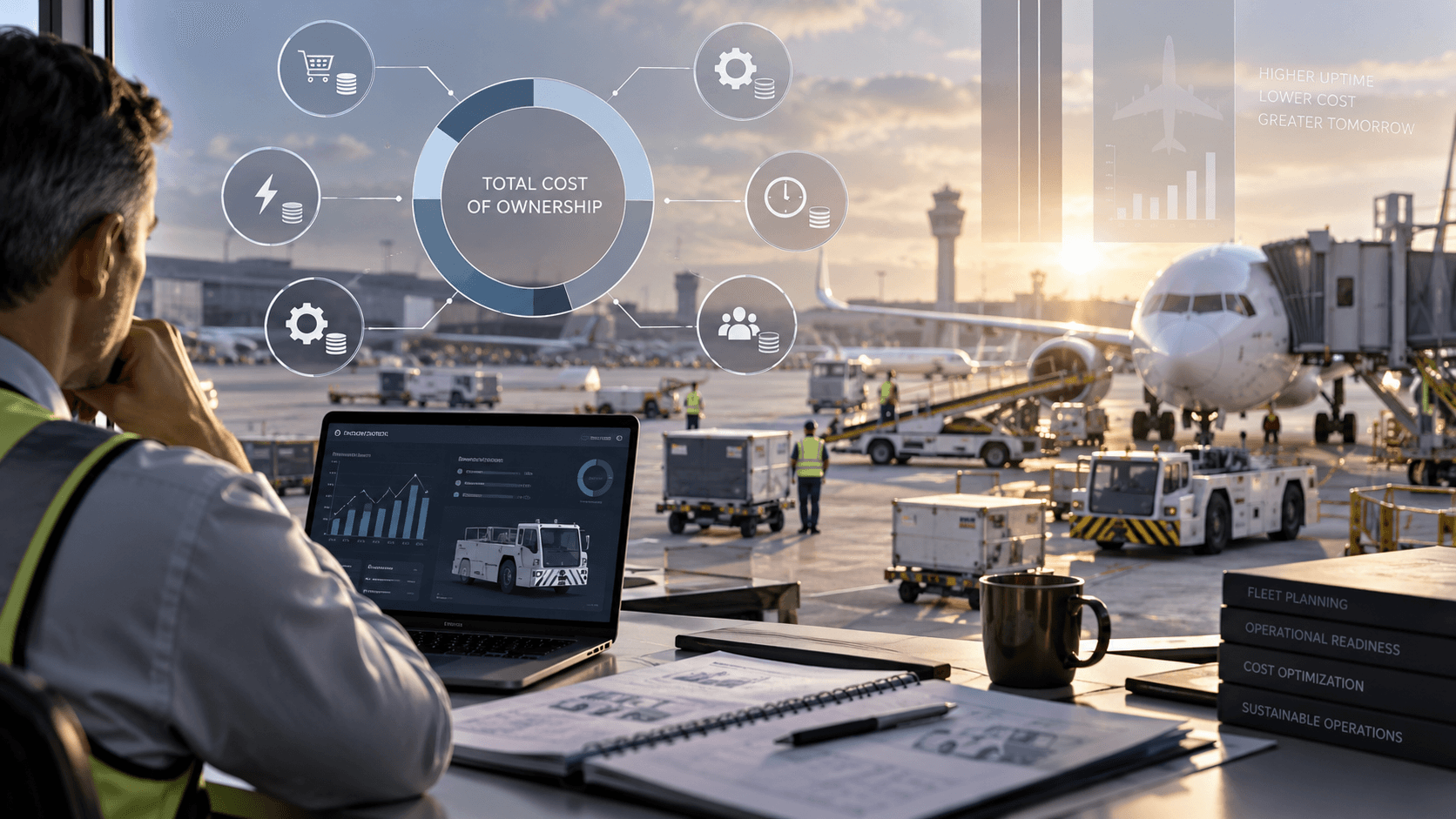
GSE purchasing decisions sometimes focus too heavily on equipment acquisition cost.
But the real economic impact occurs across the entire equipment lifecycle.
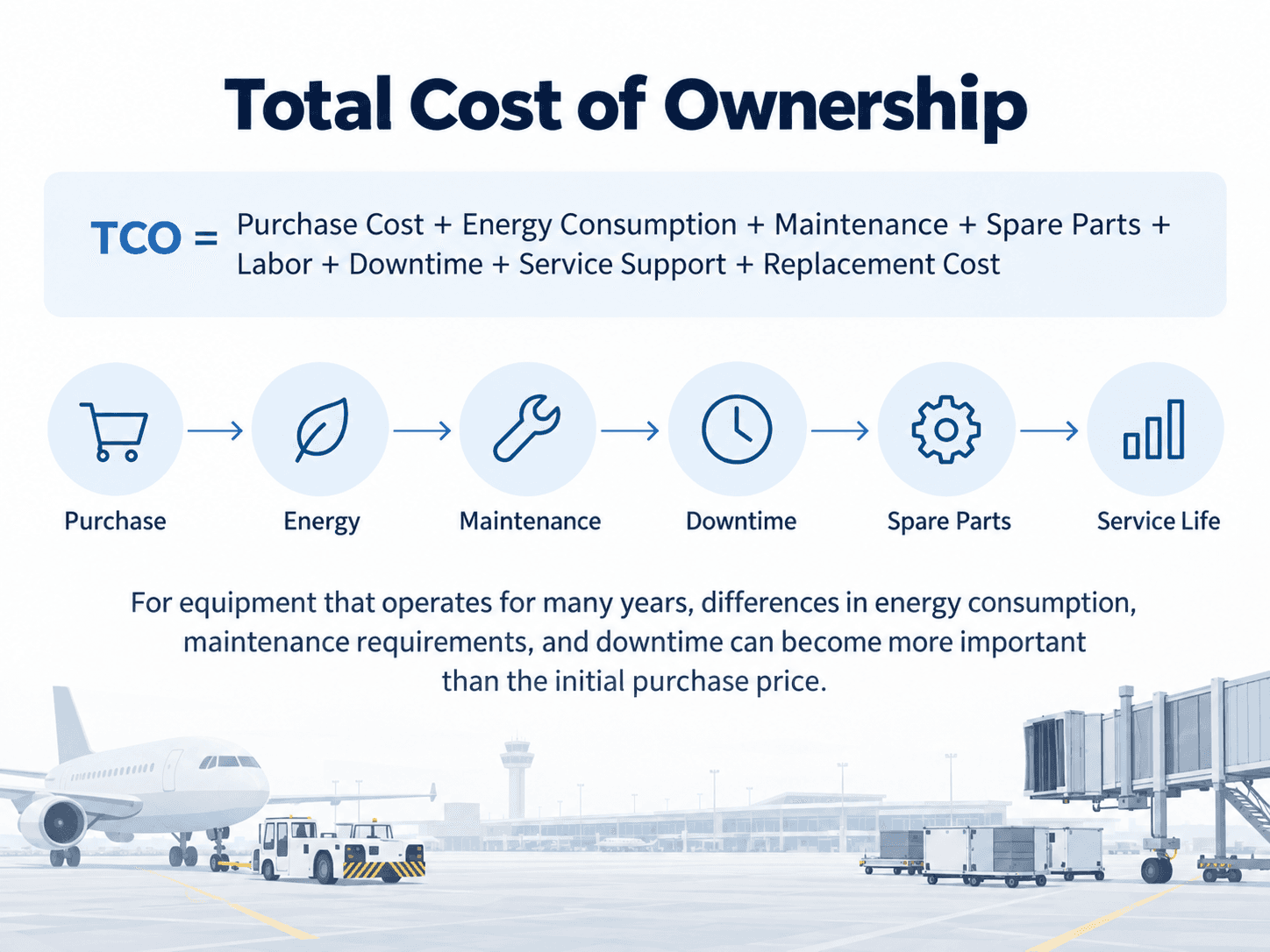
Total Cost of Ownership
TCO =
Purchase cost
Energy consumption
Maintenance
Spare parts
Labor
Downtime
Service support
Replacement cost
For equipment that operates for many years, differences in energy consumption, maintenance requirements and downtime can eventually become more important than the initial price difference.
🔍 How to Choose the Right Ground Support Equipment
Selecting GSE should begin with the airport operation rather than a product catalogue.
Several factors should be evaluated.
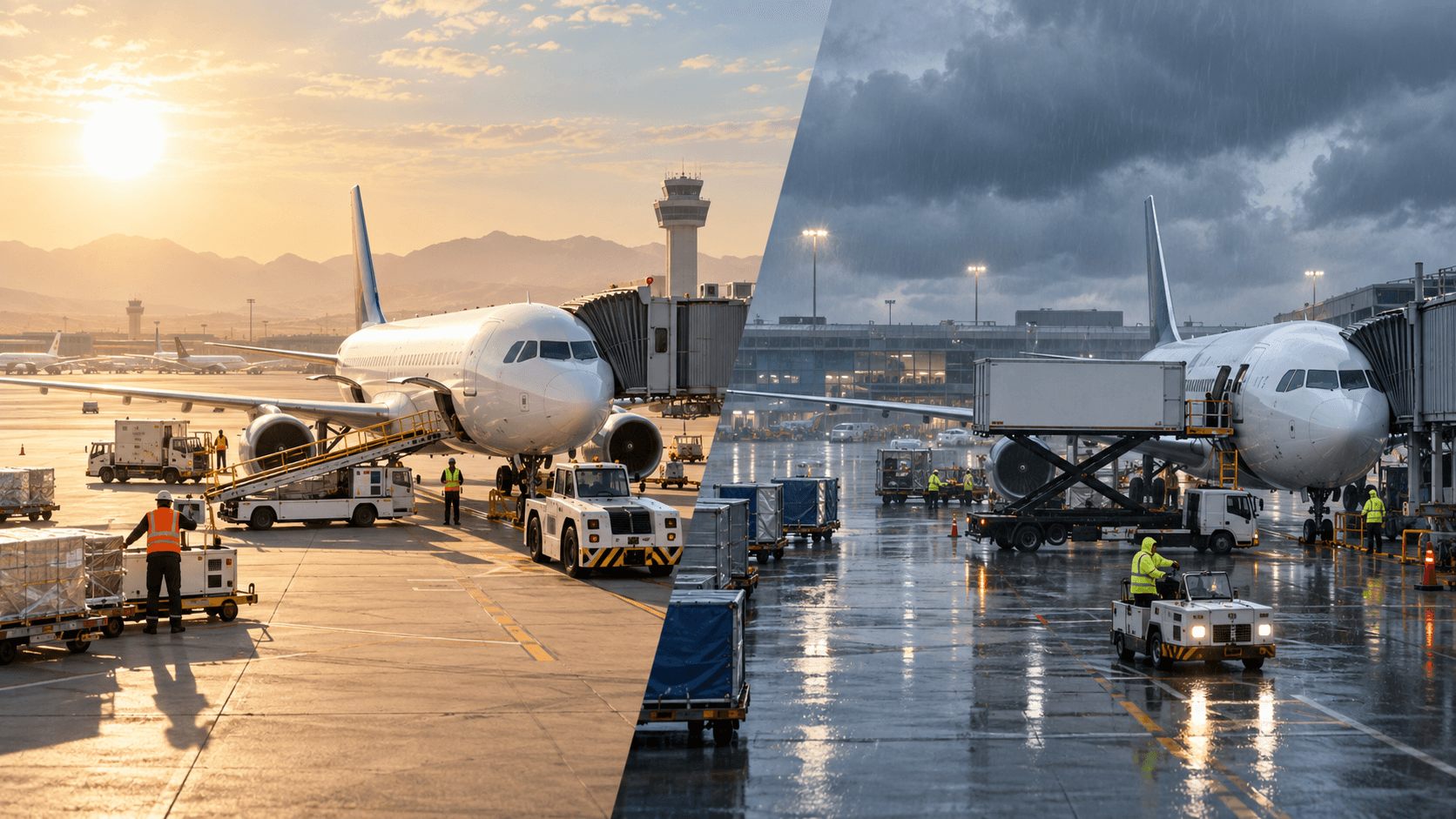
🌡️ 1. Climate
Determine realistic operating conditions, including:
summer design temperatures;
winter temperatures;
relative humidity;
rain and moisture;
dust;
coastal salt exposure.
Equipment used in northern Europe may face completely different requirements from equipment operating in the Middle East or Southeast Asia.
✈️ 2. Aircraft Mix
Consider which aircraft the equipment actually needs to serve.
For example:
A320 / B737 narrow-body aircraft;
A330 / B787;
B777;
A350;
A380;
regional aircraft;
cargo aircraft.
Future route development should also be considered.
🏗️ 3. Gate Configuration
The same service may require a different GSE architecture depending on whether the aircraft is parked:
at a passenger boarding bridge;
at a contact gate;
at a remote stand;
in a maintenance facility.
For PCA applications, this may determine whether the most appropriate solution is:
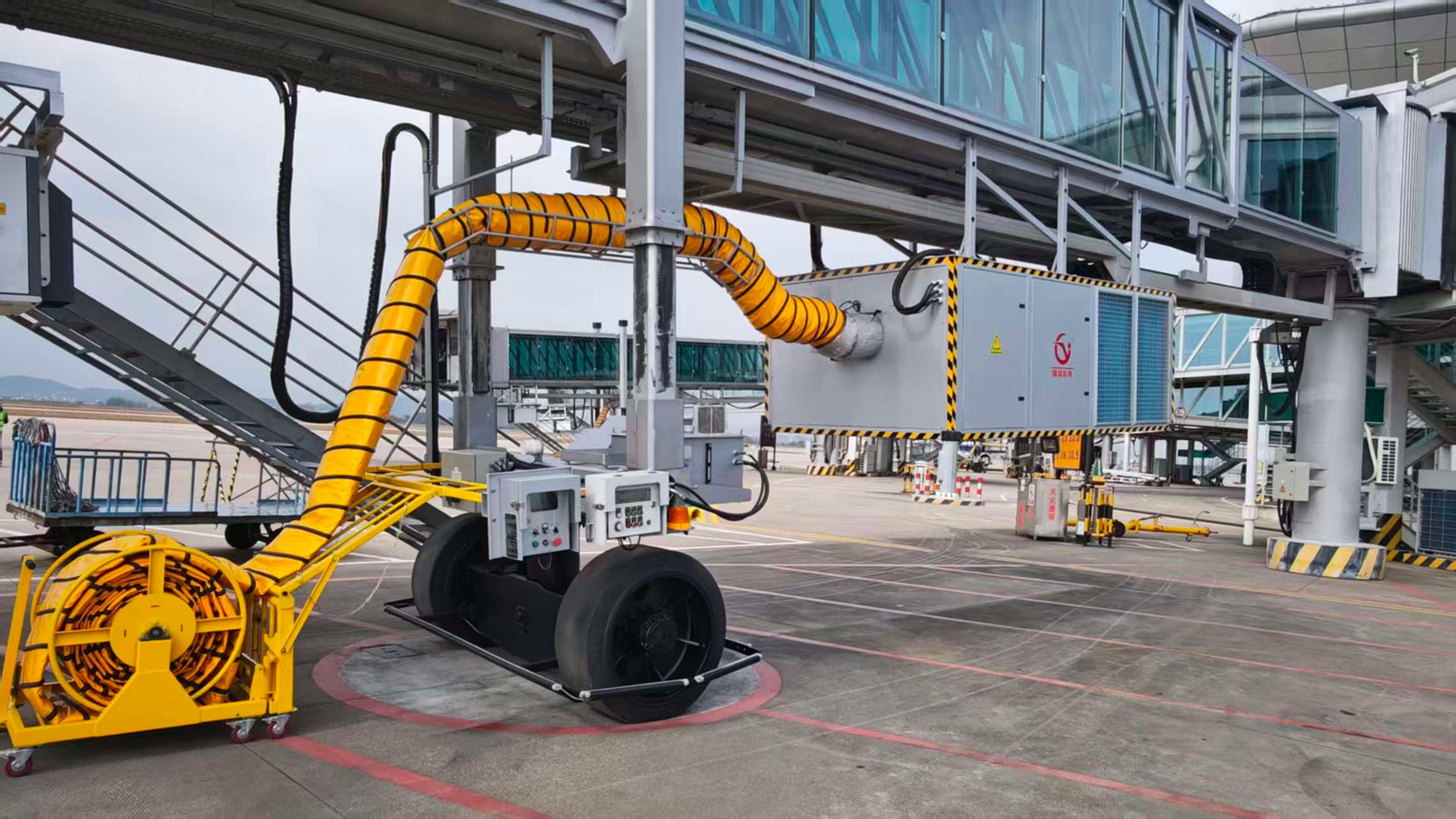
bridge-mounted, fixed or mobile.
📊 4. Utilization
Equipment operating a few times per day has very different requirements from equipment supporting continuous peak-hour operations.
Useful parameters include:
flights per gate per day;
average operating duration;
peak-hour utilization;
consecutive operating cycles;
annual operating hours.
🔧 5. Maintainability
Maintenance should be considered during procurement, not after equipment enters service.
Evaluate:
accessibility of major components;
modular design;
fault diagnostics;
availability of spare parts;
replacement procedures;
technical documentation;
remote support;
local maintenance capability.
A machine that is easy to diagnose and repair can often return to service much faster than one requiring extensive troubleshooting.
💰 6. Total Cost of Ownership
Finally, compare the full lifecycle cost rather than acquisition price alone.
A slightly more expensive machine may deliver significantly better value if it provides:
lower energy consumption;
greater availability;
simpler maintenance;
better parts availability;
longer service life.
🔧 GSE Reliability and Maintenance
Airport GSE operates in a demanding environment.
Equipment may experience:
extreme heat;
cold;
rain;
humidity;
dust;
vibration;
frequent starting and stopping;
long periods of continuous operation.
Reliability therefore comes from the combination of engineering design, manufacturing quality, correct operation and preventive maintenance.
A strong maintenance strategy should include:
✓ Routine inspections
Check critical functions before problems affect operations.
✓ Preventive maintenance
Service equipment according to operating hours, duty cycle and environmental conditions.
✓ Operator training
Incorrect operation can create unnecessary mechanical and electrical stress.
✓ Fault diagnostics
Clear diagnostic information helps technicians identify the source of failures more quickly.
✓ Critical spare-parts planning
Critical components should be identified before equipment enters service.

Learn how YCair manufactures and tests aircraft PCA systems.
📡 The Future of Ground Support Equipment
The GSE industry is evolving in several clear directions.
🔋 Electrification
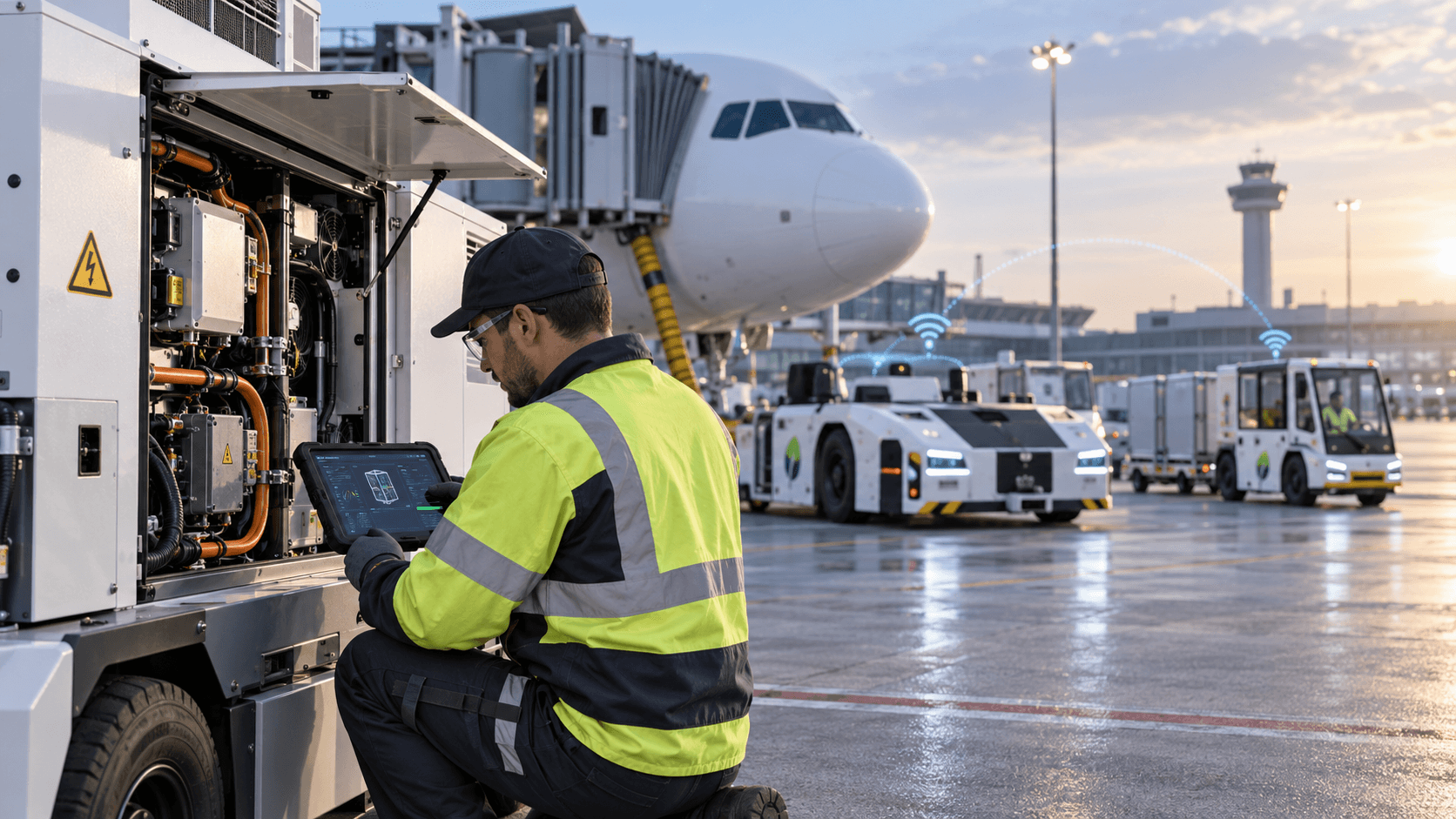
Airports are increasingly moving toward electrically powered and battery-powered equipment.
Potential benefits include:
lower local emissions;
reduced noise;
lower dependence on diesel engines;
potentially lower operating costs.
📡 Connected Equipment
Modern GSE can increasingly report:
equipment status;
alarms;
operating hours;
energy consumption;
maintenance information.
This allows airport operators to manage equipment as a connected fleet rather than as isolated machines.
🧠 Predictive Maintenance
Traditional maintenance often follows one of two approaches:
repair after failure
or
maintenance according to a fixed schedule.
Connected equipment creates another possibility:
maintenance according to actual equipment condition.
Monitoring temperatures, pressures, operating hours and system behavior can help identify abnormal conditions before complete failure occurs.
⚙️ Automation
Automation is also entering airport ground operations.
Potential applications include:
automated operating sequences;
equipment interlocks;
assisted positioning;
automatic docking;
centralized gate control;
autonomous GSE.
The objective is not simply to remove operators.
The more immediate value is often standardizing operations, reducing mistakes and improving repeatability.
📉 Smarter Energy Management
Modern equipment increasingly adjusts its output according to actual demand.
For systems such as PCA, variable-speed operation can be especially useful because maximum cooling capacity is not required during every minute of every turnaround.
The Bigger Picture
Ground Support Equipment may operate behind the scenes, but it forms an essential part of modern airport infrastructure.
A successful turnaround depends on many different systems working together at the right time.
For airport operators, airlines and ground handlers, the question should therefore not simply be:
“Which machine has the highest specification?”
A more useful question is:
“Which solution will perform reliably in our real operating environment throughout its lifecycle?”
That means evaluating equipment based on:
✓ operational requirements
✓ aircraft compatibility
✓ climate conditions
✓ reliability
✓ maintainability
✓ energy consumption
✓ local support
✓ total cost of ownership
The best GSE solution is ultimately the one that consistently supports safe and efficient aircraft operations.
Frequently Asked Questions
What does GSE mean in aviation?
GSE stands for Ground Support Equipment. It refers to the machines, vehicles and support devices used to service aircraft while they are on the ground.
What are common examples of GSE?
Common examples include GPUs, PCA units, pushback tractors, passenger boarding bridges, belt loaders, baggage carts, aircraft stairs, fuel vehicles and maintenance equipment.
What is a PCA?
A Pre-Conditioned Air unit supplies temperature-controlled air to an aircraft while it is parked.
What is the difference between PCA and GPU?
A GPU supplies electricity, while a PCA supplies conditioned air.
They perform different functions but are often used simultaneously during aircraft turnaround.
Why is reliable GSE important?
Equipment failure can interrupt tightly coordinated ground operations and may affect turnaround time, passenger comfort, maintenance workload and departure punctuality.
What should an airport consider when purchasing GSE?
Important factors include:
aircraft types;
climate;
gate configuration;
utilization;
technical performance;
maintenance requirements;
spare-parts availability;
energy consumption;
supplier support;
total cost of ownership.
Planning a PCA Project?
Every airport has different operating conditions.
Aircraft type, ambient climate, gate configuration and duty cycle should be considered before selecting a Pre-Conditioned Air system.
Choose a PCA around the operation—not cooling capacity alone.
Suggested CTA buttons
Talk to a PCA Engineer
View PCA Solutions
Request Technical Data
