
An aircraft may be parked at the gate with its engines shut down, but the cabin still needs ventilation and temperature control.
Passengers may be boarding, cleaners may be working inside, cabin crews may be preparing for departure, and maintenance teams may need to remain onboard for extended periods.
This is where Pre-Conditioned Air, or PCA, becomes important.
PCA is a type of Ground Support Equipment that supplies temperature-controlled air from ground equipment directly into a parked aircraft.
What Does PCA Mean in Aviation?
PCA stands for Pre-Conditioned Air.
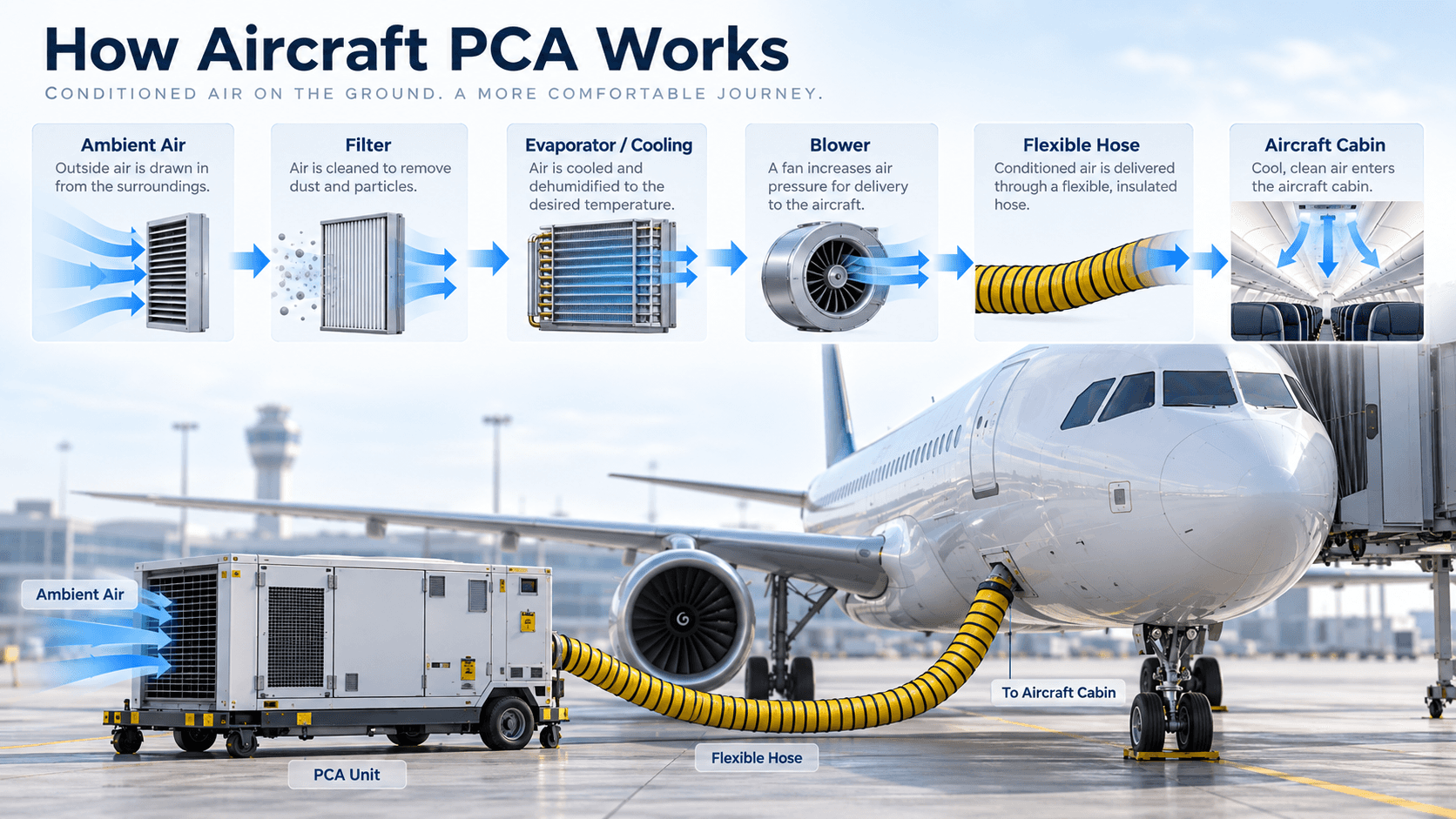
A PCA system conditions air outside the aircraft and delivers it into the cabin through an insulated flexible hose.
Its primary purpose is simple:
❄️ cool the aircraft in hot conditions;
🔥 provide heated air where required in cold conditions;
💨 maintain sufficient airflow inside the aircraft while it remains on the ground.
Unlike conventional building air conditioning, aircraft PCA must operate under demanding aviation conditions.
The system may need to serve different aircraft types, operate through long flexible ducts, overcome significant pressure losses and continue working during extreme outdoor temperatures.
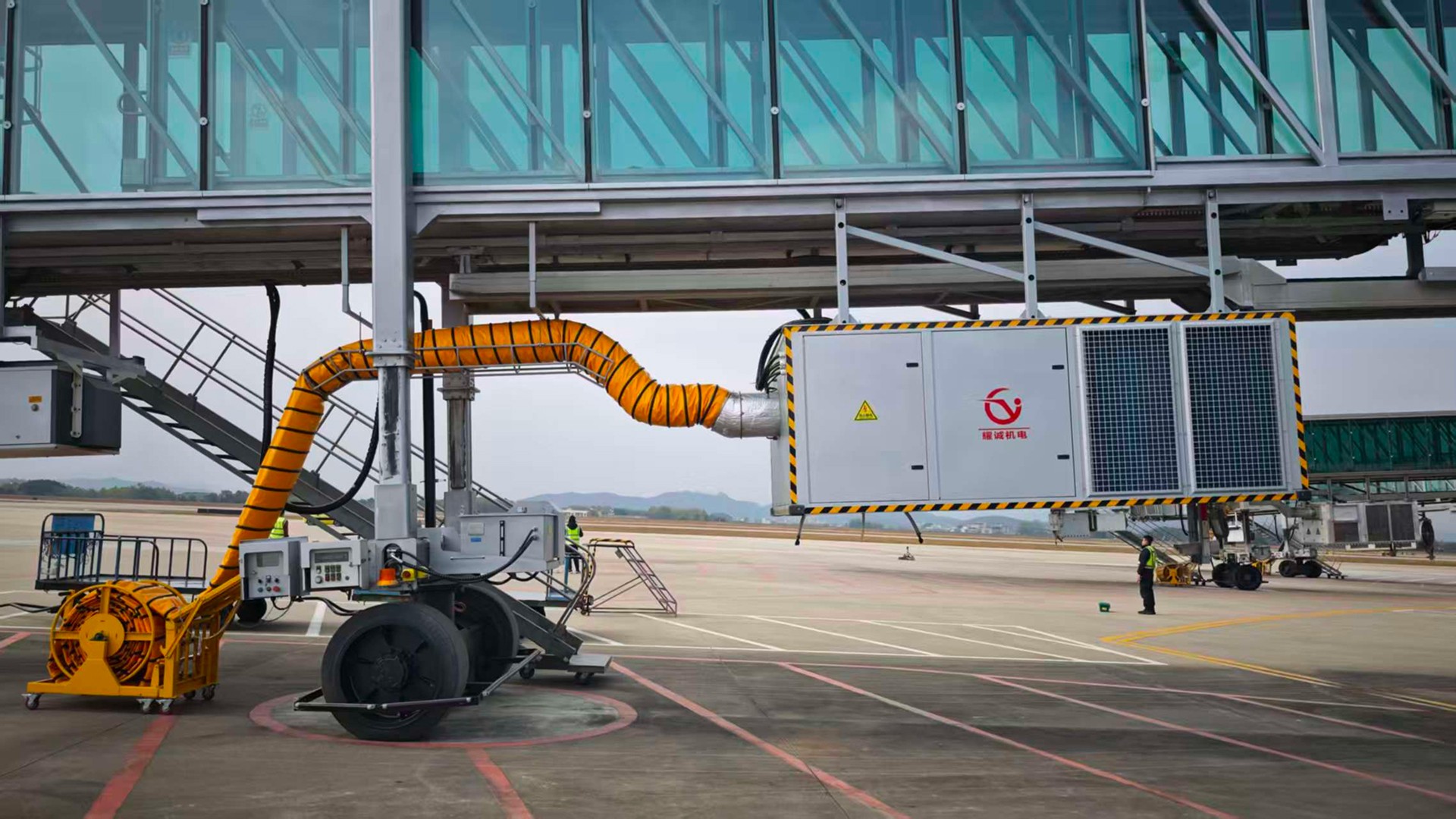
Why Do Aircraft Need PCA on the Ground?
Aircraft cabins can heat up rapidly while parked under direct sunlight.
Heat can come from several sources:
outside air temperature;
solar radiation;
passengers;
cabin lighting;
onboard electronic equipment;
open doors during boarding.
In cold climates, the opposite problem occurs and the aircraft may require heated air.
PCA therefore helps create a more comfortable and workable cabin environment during aircraft turnaround.
👥 Passenger Comfort
Passengers may spend considerable time inside an aircraft before departure.
Maintaining a suitable cabin temperature improves the boarding experience, particularly during very hot or cold weather.
👨✈️ Crew Working Conditions
Flight and cabin crews often enter the aircraft before passengers.
PCA helps provide a more suitable environment while they prepare the cabin and complete pre-flight procedures.
🔧 Maintenance and Cleaning
Maintenance technicians and cleaning teams may remain onboard for extended periods.
Providing conditioned air makes these activities easier during demanding weather conditions.
Where Is Aircraft PCA Used?
PCA can be used in several airport environments.
🌉 Passenger boarding gates
PCA can be integrated with passenger boarding bridge infrastructure and deployed whenever an aircraft arrives at the gate.
🚛 Remote stands
Mobile PCA units can be moved between aircraft positions where permanent gate infrastructure is unavailable.
🔧 Maintenance areas
Aircraft undergoing inspection or maintenance may require conditioned air for extended periods.
🏢 Hangars
PCA systems may also support aircraft servicing inside maintenance facilities.
What Are the Main Types of PCA?
There is no single PCA configuration suitable for every airport.
The main configurations include:
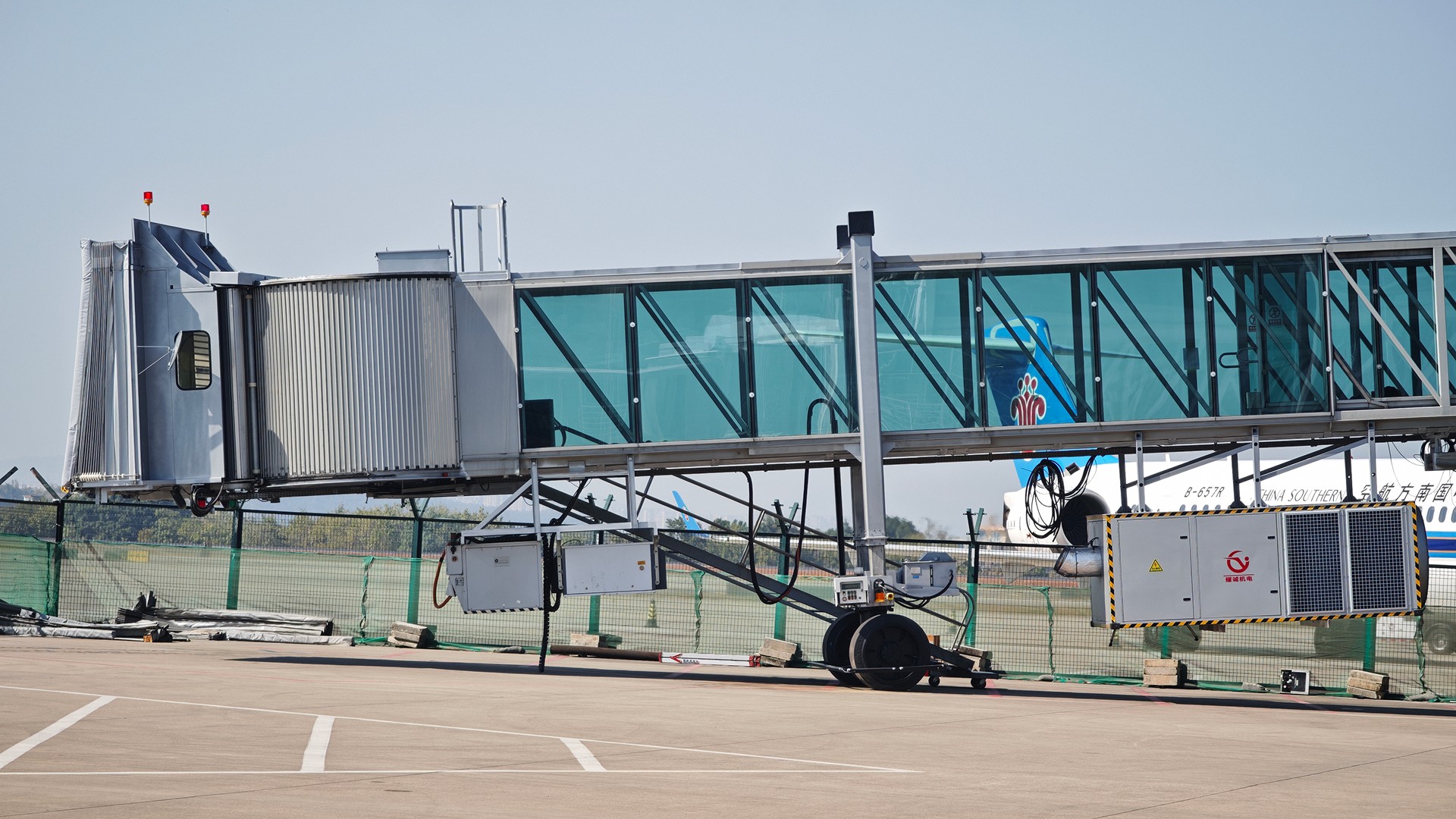
🌉 Bridge-Mounted PCA
Bridge-mounted PCA is installed on or beneath a passenger boarding bridge.
It is normally associated with a permanent contact gate.
Potential benefits include fast deployment, reduced apron vehicle movement and close integration with airport gate infrastructure.
🚛 Mobile PCA
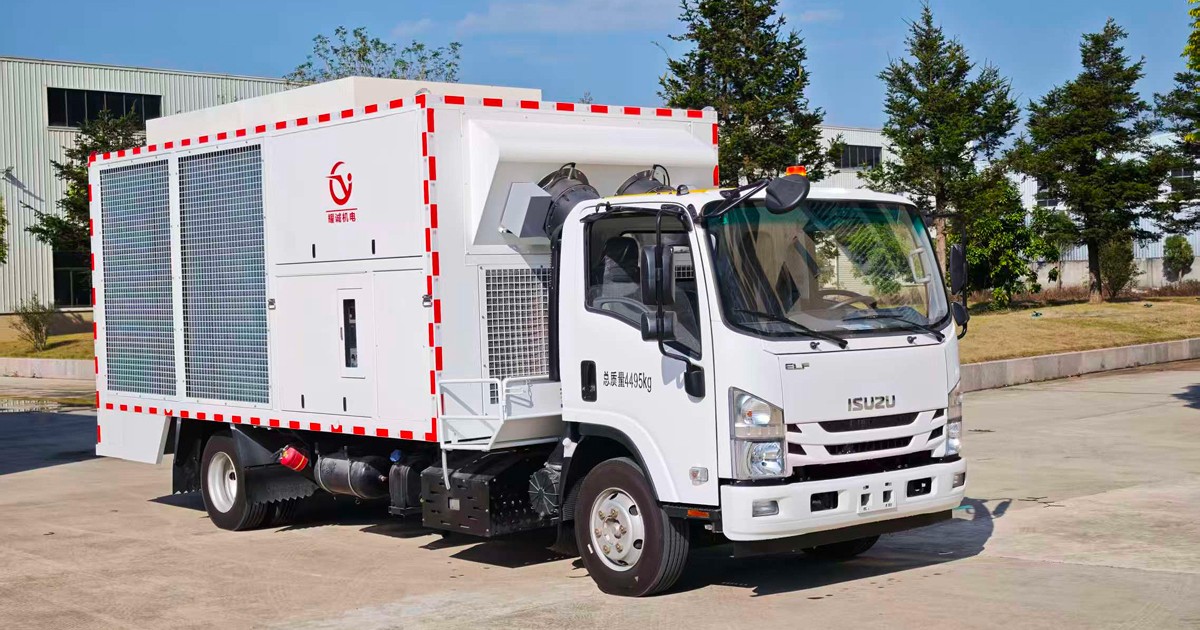
Mobile PCA can move between aircraft stands.
Depending on the system, it may be truck-mounted, trailer-mounted or towable.
This type of equipment is particularly useful for remote stands, temporary operations and airports requiring greater operational flexibility.
🏗️ Fixed PCA
Some PCA systems are permanently installed near the aircraft stand rather than mounted directly on the boarding bridge.
The final arrangement depends on the airport's infrastructure.

💧 Chilled-Water PCA
Some airports use centralized chilled-water infrastructure.
The gate PCA equipment uses chilled water from the airport's central plant to condition the air supplied to the aircraft.
❄️ Direct-Expansion PCA
A direct-expansion, or DX, PCA contains its own refrigeration system.
Cooling is produced locally by the PCA equipment.
You can view different aircraft PCA and ACU configurations in the YCair product range.
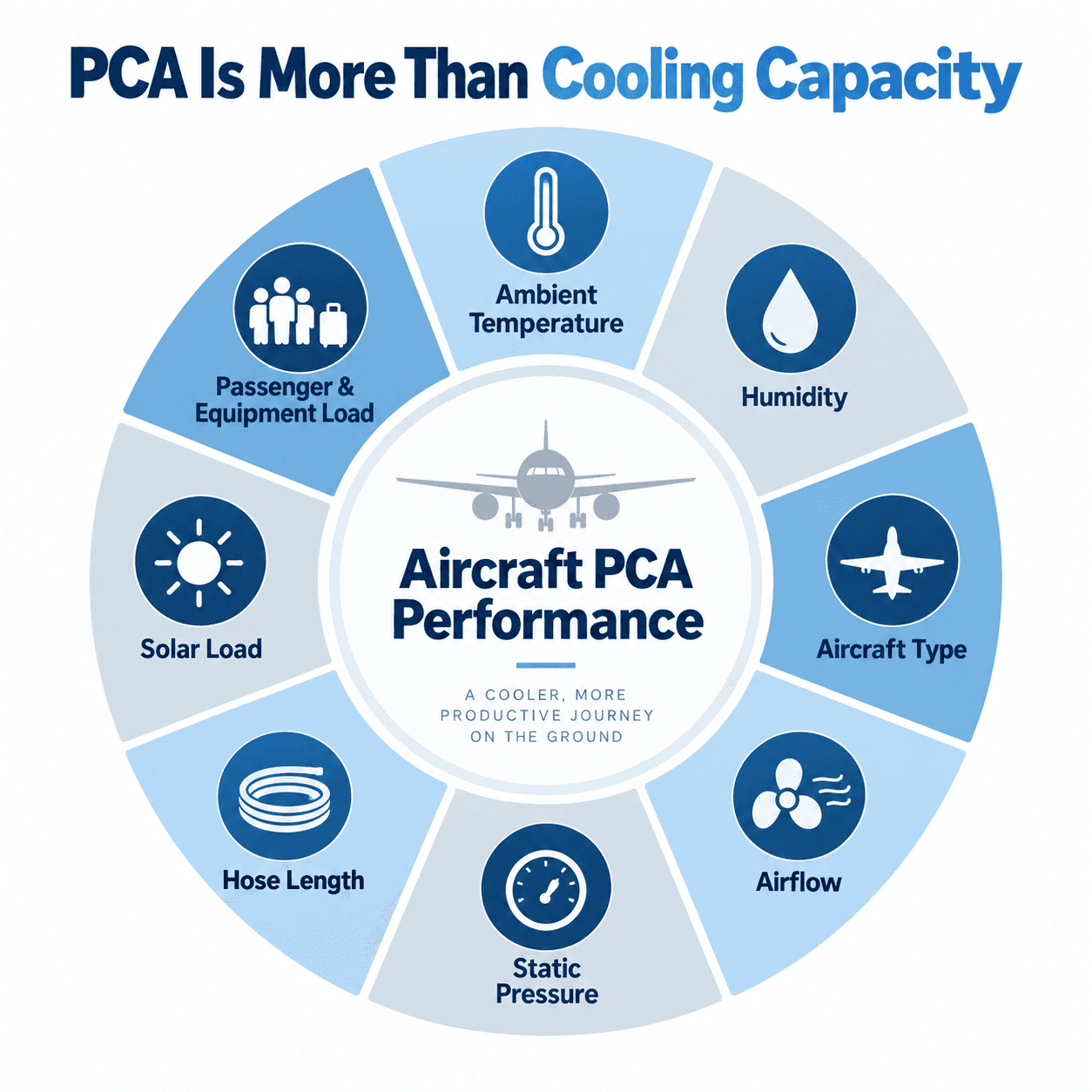
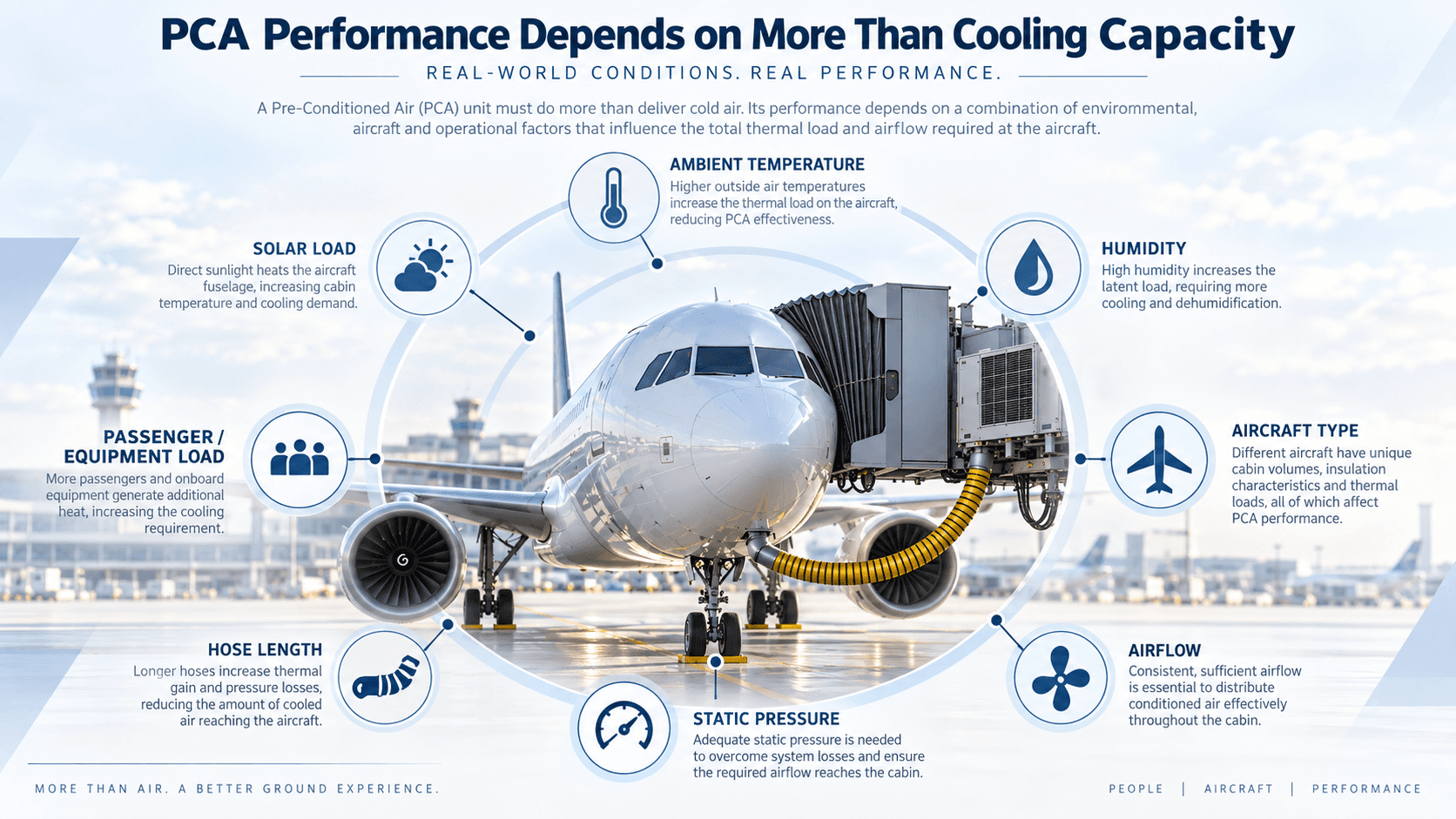
PCA Is More Than Cooling Capacity
When comparing aircraft PCA systems, one of the most common mistakes is focusing only on cooling capacity in kW.
Actual aircraft performance can also depend on:
🌡️ ambient temperature;
💧 humidity;
✈️ aircraft type;
💨 airflow;
📈 static pressure;
〰️ hose length;
☀️ solar load;
👥 passenger and equipment load.
For this reason, PCA should always be evaluated as a complete air-delivery system rather than simply as a refrigeration machine.
PCA as Part of Aircraft Ground Operations
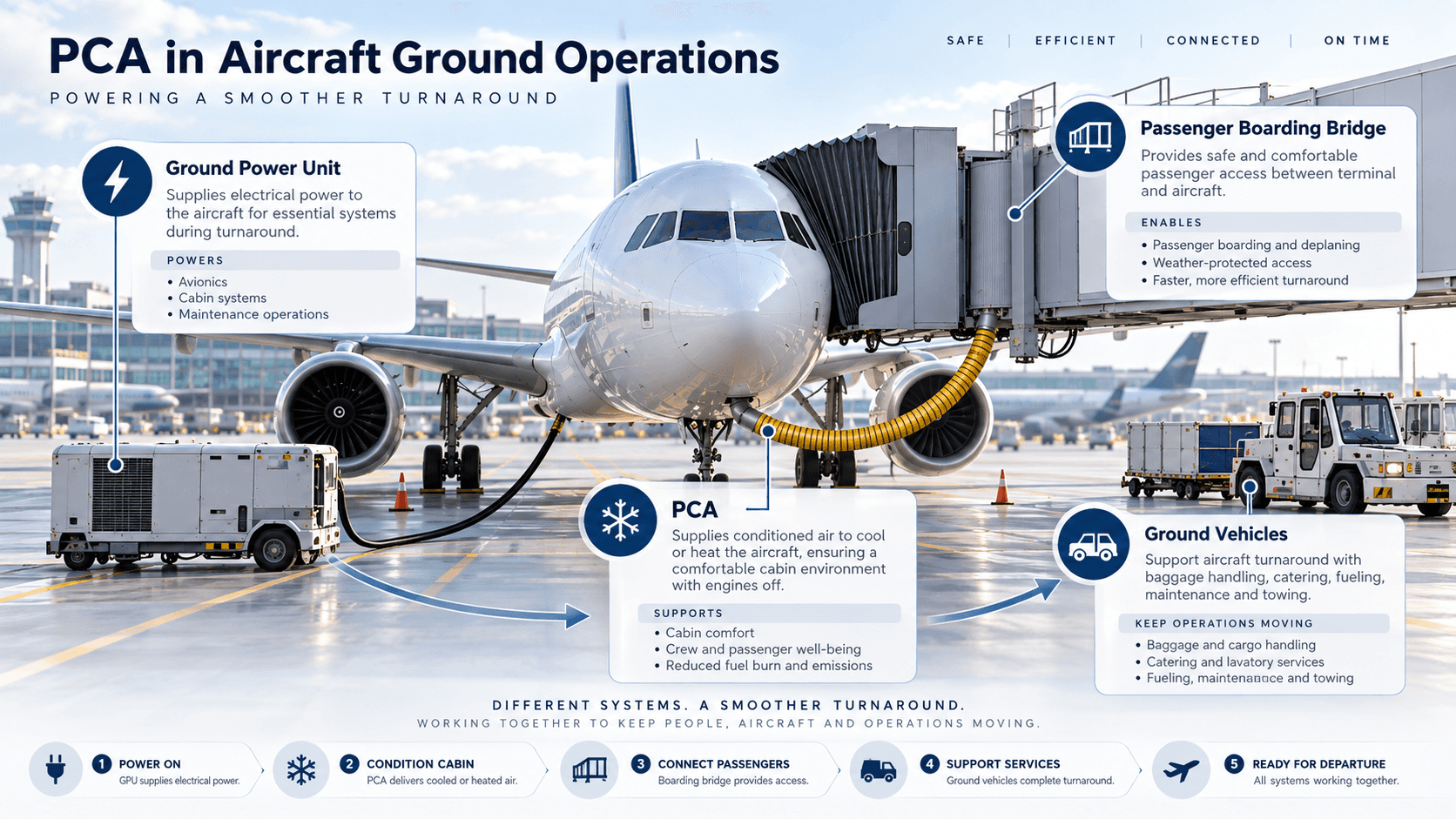
PCA normally works alongside other aircraft ground-support systems.
For example:
⚡ Ground Power Unit → supplies electrical power
❄️ PCA → supplies temperature-controlled air
🌉 Passenger Boarding Bridge → provides passenger access
🚜 Ground vehicles → support aircraft servicing and turnaround
Together, these systems help prepare the aircraft for its next flight.
A Simple Way to Think About PCA
Aircraft PCA performs one basic function:
produce conditioned air on the ground and deliver it efficiently into a parked aircraft.
However, engineering the correct system requires understanding the complete operating environment.
The most important questions are:
Which aircraft will be served?
What are the local climate conditions?
How long is the PCA hose?
What airflow and static pressure are required?
Is the system bridge-mounted, fixed or mobile?
How often will the equipment operate?
Answering these questions is the starting point for selecting the correct PCA configuration.
To understand the technical process in more detail, continue with How Does Aircraft PCA Work?.
